How to Dry Boots: 12 Fast Methods That Actually Work
Wet boots can ruin your day and damage expensive footwear if not dried properly. Whether you’re dealing with work boots soaked from rain or hiking boots drenched from snow, knowing how to dry boots quickly and safely is essential. This comprehensive guide covers 12 proven methods to dry your boots fast without causing damage, plus expert tips for overnight drying and maintaining boot longevity.
Why Proper Boot Drying is Critical for Footwear Longevity
Proper boot drying extends footwear life by preventing material deterioration and bacterial growth. When boots remain wet for extended periods, leather cracks, synthetic materials break down, and adhesives weaken. According to 2024 footwear industry data, properly dried boots last 40% longer than those subjected to improper drying methods.
Moisture trapped inside boots creates an ideal environment for bacteria and fungi, leading to odors and potential foot health issues. The drying process must remove moisture while preserving boot structure and materials. Understanding why proper drying matters helps you choose the right method for your specific boot type and situation.
Best Methods to Dry Boots Fast
When you need to dry boots fast, several proven methods deliver results within hours. The key is choosing the right technique based on your available time, tools, and boot materials. These methods range from specialized equipment to household items that work surprisingly well.
Using a Boot Dryer for Professional Results
A dedicated boot dryer remains the most effective way to dry boots quickly and safely. Modern boot dryers use gentle forced air circulation to remove moisture in 2-4 hours without damaging materials. Electric boot dryers typically consume 100-200 watts and maintain temperatures between 105-115°F, perfect for all boot types including leather work boots.
Newspaper and Paper Towel Method
The newspaper stuffing method offers a reliable way to dry boots overnight using materials you already have. Crumple newspaper or paper towels and stuff them tightly into wet boots, replacing every 2-3 hours. This absorptive method works particularly well for work boots and removes moisture from hard-to-reach areas inside the boot.
Rice and Dry Grain Absorption Technique
Uncooked rice serves as an excellent moisture absorber for drying boots at home. Fill clean socks with dry rice and insert them into wet boots for 6-8 hours. The rice naturally draws moisture from boot interiors without heat damage. This method works especially well for expensive leather boots where gentle drying is crucial.
How to Dry Boots Overnight Without Damage
Overnight drying requires patience but delivers excellent results without risking boot damage. The goal is creating optimal conditions for natural moisture evaporation while maintaining boot shape and material integrity. These methods work particularly well for work boots that need to be ready for the next day.
Fan and Air Circulation Method
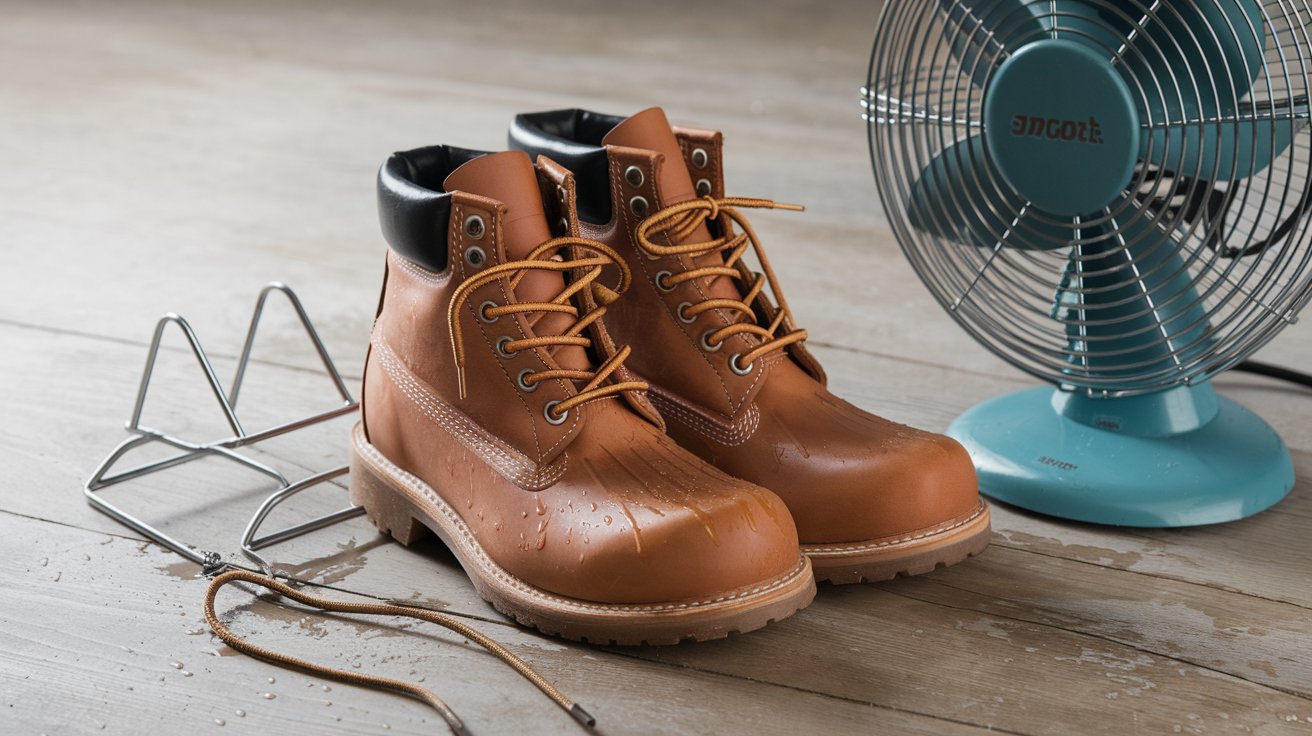
Position wet boots in front of a fan to create air circulation that accelerates natural drying. Remove insoles and laces, then angle boots toward the fan for maximum airflow penetration. This gentle method typically requires 8-12 hours but preserves boot materials while effectively removing moisture from all areas.
Silica Gel Packet Technique
Silica gel packets from shoe boxes or electronics packaging provide excellent moisture absorption for overnight boot drying. Collect 10-15 packets and place them inside each boot with newspaper stuffing. This combination removes moisture efficiently while maintaining safe temperatures that won’t damage leather or synthetic materials.
How to Dry the Inside of Boots Fast
The boot interior typically retains moisture longest, making targeted inside drying crucial for complete boot care. Interior moisture causes odors, material degradation, and comfort issues. Focus on methods that penetrate deep into boot cavities and remove moisture from insoles, linings, and hard-to-reach areas.
Remove all removable components like insoles and orthotics before beginning the drying process. These items trap moisture and prevent proper airflow. Clean insoles separately and ensure they’re completely dry before reassembling your boots. This approach reduces total drying time by 30-40% compared to drying assembled boots.
What NOT to Do When Drying Boots
Avoiding common boot drying mistakes prevents permanent damage and extends footwear life. Many people unknowingly damage their boots by using excessive heat or inappropriate drying methods. Understanding what not to do is as important as knowing proper techniques.
Never Use Direct Heat Sources
Direct heat from radiators, space heaters, or hair dryers causes leather to crack and synthetic materials to warp. High temperatures above 120°F damage boot adhesives and cause permanent shrinkage. Always maintain temperatures below 110°F and use indirect heat sources when necessary for safe boot drying.
Avoid Machine Dryers for Most Boot Types
Machine dryers subject boots to excessive heat and tumbling action that damages materials and affects fit. While some athletic shoes tolerate machine drying, work boots and leather boots should never go in conventional dryers. The high heat and mechanical stress cause irreversible damage to boot construction and materials.
Drying Different Boot Types: Specific Techniques
Different boot materials and constructions require tailored drying approaches for optimal results. Leather boots need gentler treatment than synthetic materials, while waterproof boots present unique challenges. Understanding your boot type ensures you choose the most effective and safe drying method.
How to Dry Work Boots Safely
Work boots typically feature thick leather construction and steel components that require careful drying. Remove steel-toe inserts if possible, and use absorption methods rather than heat. The newspaper and rice methods work excellently for work boots, typically requiring 12-16 hours for complete drying without material damage.
Leather Boot Drying Best Practices
Leather boots demand the gentlest drying techniques to prevent cracking and maintain flexibility. Use cedar shoe trees to maintain shape during drying, and apply leather conditioner once completely dry. Natural air drying combined with absorption methods preserves leather quality while removing moisture effectively.
Cold Weather Boot Drying Solutions
Cold air can effectively dry boots when combined with proper airflow and absorption techniques. Winter conditions often create wet boot situations requiring reliable indoor drying methods. Cold weather drying focuses on creating optimal conditions without relying on external heat sources that may not be available.
Position boots in heated indoor areas with good air circulation. The temperature difference between cold, wet boots and warm indoor air creates natural evaporation that effectively removes moisture. This method requires 18-24 hours but works reliably even in freezing outdoor temperatures.
Professional Boot Drying Equipment Options
For frequent boot drying needs, investing in professional equipment provides consistent results and time savings. Commercial boot dryers range from simple forced-air models to sophisticated systems with temperature and timer controls. These tools pay for themselves through extended boot life and convenience.
Electric boot dryers cost between $25-$150 and typically dry boots in 2-6 hours depending on moisture level and boot size. UV sanitizing boot dryers eliminate bacteria while drying, providing additional hygiene benefits for work boots used in challenging environments.
Related video about how to dry boots
This video complements the article information with a practical visual demonstration.
FAQ – Common Questions
How can I dry my boots fast?
The fastest way to dry boots safely is using a boot dryer, which takes 2-4 hours. Alternatively, stuff boots with newspaper and place them near a fan for 6-8 hours. Remove insoles and laces first to speed the process. Avoid direct heat sources like hair dryers that can damage boot materials.
Is it safe to put boots in a dryer?
Most boots should never go in a machine dryer due to high heat and tumbling action that damages materials and affects fit. Athletic shoes may tolerate low heat settings, but work boots and leather boots will suffer permanent damage from machine dryers.
How long do boots need to dry?
Drying time depends on boot material, moisture level, and method used. Boot dryers work in 2-4 hours, while air drying takes 12-24 hours. Thick work boots may need up to 48 hours for complete interior drying using natural methods.
Will cold air dry boots?
Yes, cold air can dry boots effectively when combined with good airflow and absorption techniques. The process takes longer (18-24 hours) but works reliably. Position boots in heated indoor areas with fans to accelerate cold air drying.
Can I dry boots in the oven?
Never dry boots in an oven as the high heat will damage leather, melt synthetic materials, and affect boot adhesives. Oven temperatures are too high and uncontrolled for safe boot drying. Use gentle methods like air drying or boot dryers instead.
What’s the best way to dry boots without a boot dryer?
Without a boot dryer, stuff boots with newspaper or rice-filled socks, remove insoles, and position near a fan. Replace newspaper every 2-3 hours for faster results. This method typically takes 8-12 hours and works safely for all boot types.
| Drying Method | Time Required | Best For |
|---|---|---|
| Boot Dryer | 2-4 hours | All boot types, fastest results |
| Newspaper Stuffing | 8-12 hours | Work boots, overnight drying |
| Rice Absorption | 6-8 hours | Leather boots, gentle drying |
| Fan + Air Circulation | 12-18 hours | All materials, natural method |