Best Slip On Work Shoes 2025: Steel Toe & Non-Slip Guide
Finding the right slip on work shoes can make the difference between comfort and pain during long work days. These convenient work boots eliminate laces while providing essential protection, slip resistance, and durability. Whether you need steel toe protection, waterproof materials, or non-slip soles, the right pair combines safety features with easy on-off convenience for busy professionals across construction, healthcare, food service, and manufacturing industries.
Top Steel Toe Slip On Work Shoes for Maximum Protection
Steel toe slip on work shoes provide crucial foot protection in industrial environments where heavy objects pose constant hazards. OSHA requires protective footwear in workplaces with impact risks over 75 foot-pounds, making steel toe options essential for construction, manufacturing, and warehouse workers. The best models combine ASTM F2413 safety ratings with comfortable slip-on designs that save valuable time during shift changes.
Leading manufacturers like Georgia Boot, Keen, and Timberland Pro engineer their steel toe slip-on models with reinforced toe boxes that meet or exceed safety standards while maintaining breathability and comfort. Modern steel toe designs use lightweight alloys and ergonomic shaping to reduce foot fatigue during 10-12 hour shifts, addressing the primary complaint workers had with older, heavier steel toe boots.
ASTM Safety Standards for Steel Toe Work Shoes
All legitimate steel toe work shoes must meet ASTM F2413-18 standards, which require toe protection to withstand 75 foot-pounds of impact and 2,500 pounds of compression. This certification ensures your slip-on work shoes provide adequate protection against falling tools, equipment, and materials commonly found in industrial workplaces. Always verify ASTM labeling before purchasing any safety footwear.
Best Steel Toe Slip On Brands for 2025
Georgia Boot leads the market with their Giant Romeo series, offering steel toe slip-on options starting at $120-180. Timberland Pro’s Boondock and Pit Boss lines provide premium steel toe protection with prices ranging $150-220. Keen Utility and Caterpillar also manufacture reliable steel toe slip-ons, with most models featuring electrical hazard protection and puncture-resistant soles for comprehensive workplace safety.
Non-Slip Work Shoes: Essential Traction for Safety
Non-slip work shoes prevent costly workplace accidents caused by slippery surfaces in restaurants, hospitals, and industrial facilities. The Bureau of Labor Statistics reports that slip-and-fall incidents account for over 20% of workplace injuries, making proper footwear traction a critical safety investment. Quality non-slip soles use specialized rubber compounds and tread patterns engineered for maximum grip on wet, oily, and smooth surfaces.
Restaurant workers, healthcare professionals, and janitorial staff require slip-resistant work shoes that meet specific industry standards. The best non-slip slip-on work shoes feature oil-resistant outsoles, closed-toe designs for hygiene compliance, and easy-clean surfaces that maintain their grip properties even after repeated washing and sanitizing protocols required in food service and medical environments.
Testing Standards for Non-Slip Work Shoes
Legitimate non-slip work shoes undergo ASTM F1677 testing on ceramic tile with glycerol solution, and ASTM F2913 testing on quarry tile with glycerol. Shoes must achieve minimum coefficient values of 0.42 (wet) and 0.50 (dry) to earn slip-resistant certification. Look for these specific test ratings when selecting slip-on work shoes for high-risk environments like commercial kitchens and healthcare facilities.
Industry-Specific Non-Slip Requirements
Food service workers need slip-on work shoes with closed-toe designs and washable surfaces to meet health department requirements. Healthcare workers require shoes that resist blood-borne pathogens and provide all-day comfort during 12-hour shifts. Industrial workers need non-slip soles that maintain grip on metal surfaces and chemical-resistant materials that withstand harsh cleaning agents and industrial fluids.
Waterproof Slip On Work Shoes for All-Weather Protection
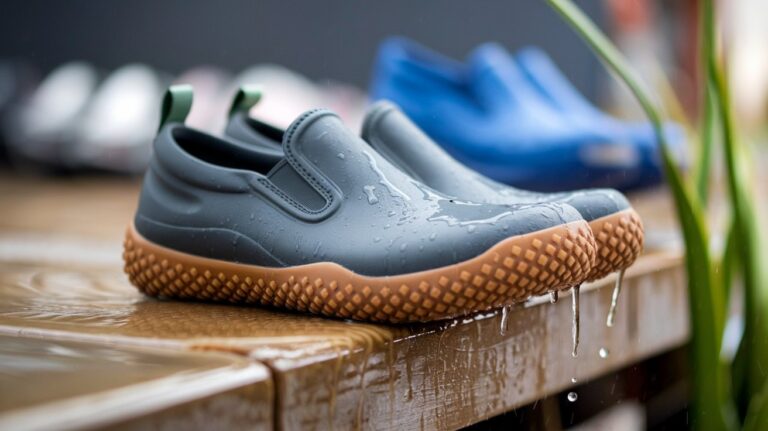
Waterproof slip on work shoes protect feet from moisture while maintaining breathability during outdoor work and wet industrial conditions. Quality waterproof models use Gore-Tex membranes, sealed seams, and water-resistant leather treatments to create complete moisture barriers. Construction workers, landscapers, and outdoor maintenance professionals depend on waterproof footwear to prevent foot problems like athlete’s foot, blisters, and cold-related injuries during extended exposure to wet conditions.
The best waterproof work boots balance moisture protection with breathability to prevent internal condensation that can cause discomfort and bacterial growth. Advanced waterproof technologies like eVent and proprietary membrane systems allow vapor transfer while blocking liquid water, ensuring feet stay dry from both external moisture and internal perspiration during physically demanding work activities.
Men’s Slip-On Work Shoes: Durability and Comfort Features
Men’s slip-on work shoes prioritize durability, support, and protection for physically demanding occupations. Male workers typically require wider toe boxes, reinforced heel counters, and robust construction to withstand heavy use in construction, manufacturing, and outdoor work environments. Premium men’s models feature full-grain leather uppers, cushioned midsoles, and arch support systems designed for extended wear during 40-50 hour work weeks.
Leading manufacturers engineer men’s work shoes with gender-specific sizing and construction details. Men’s lasts accommodate broader feet and higher volume, while reinforcement areas focus on high-wear zones specific to male gait patterns. Popular men’s slip-on work shoe features include metatarsal guards, puncture-resistant plates, and electrical hazard protection for comprehensive workplace safety in male-dominated industries.
Sizing and Fit Considerations for Men
Men’s slip-on work shoes should provide proper heel grip without being too tight across the instep. Most men require a thumb’s width of space between the longest toe and shoe front. Width options range from D (medium) to 4E (extra-wide), with work shoe manufacturers typically offering more width options than casual footwear brands to accommodate work boot socks and foot swelling during long shifts.
Popular Men’s Slip-On Work Shoe Styles
Romeo-style slip-on work boots feature elastic side panels and pull tabs for easy entry while providing ankle support. Chelsea work boots offer similar convenience with refined styling suitable for both work and casual wear. Low-cut slip-on work shoes provide maximum mobility and breathability for workers who don’t require ankle protection but need safety features like steel toes and slip-resistant soles.
Women’s Slip-On Work Shoes: Specialized Design Features
Women’s slip-on work shoes address unique biomechanical needs with narrower heels, lower volume lasts, and arch support designed for female foot anatomy. Women workers in healthcare, education, and food service require comfortable, professional-looking footwear that provides safety features without sacrificing style. Quality women’s work shoes feature cushioned insoles, shock-absorbing midsoles, and breathable linings optimized for extended standing and walking.
Female-specific work shoe construction accommodates higher arches, narrower heels, and different pressure point distributions compared to men’s footwear. Women’s slip-on work shoes often include additional metatarsal padding, arch support systems, and heel cushioning to address common female foot issues like plantar fasciitis and metatarsalgia that can develop during long work shifts on hard surfaces.
Composite Toe vs Steel Toe in Slip-On Work Shoes
Composite toe slip-on work shoes offer lightweight protection using materials like carbon fiber, Kevlar, and fiberglass instead of traditional steel. These advanced materials meet the same ASTM F2413 safety standards while reducing overall shoe weight by 30-40% compared to steel toe equivalents. Composite toes also provide better insulation properties, making them ideal for workers in extreme temperature environments where steel toes can conduct heat or cold.
While steel toe work shoes remain more affordable and widely available, composite toe options excel in specific applications. Airport security workers, electricians, and welders benefit from composite toes that won’t set off metal detectors or conduct electrical current. The choice between steel and composite depends on workplace requirements, budget considerations, and personal comfort preferences during extended wear periods.
Cost Comparison: Steel vs Composite Toe
Steel toe slip-on work shoes typically cost $90-180, while comparable composite toe models range $120-220. The $30-40 premium for composite materials reflects advanced manufacturing processes and specialized materials. However, the lighter weight and better temperature properties of composite toes can improve worker comfort and productivity, potentially justifying the higher initial investment through reduced fatigue and improved performance.
Performance Differences in Real-World Use
Field testing shows composite toe work shoes reduce foot fatigue by 15-20% compared to steel toe equivalents during 8-hour shifts. The lighter weight reduces energy expenditure during walking and reduces strain on leg muscles. However, steel toes provide superior puncture resistance and maintain protection integrity longer in extremely harsh environments where composite materials might degrade over time.
Leather vs Synthetic Materials in Work Shoe Construction
Men’s slip-on work shoes leather construction offers superior durability, breathability, and professional appearance compared to synthetic alternatives. Full-grain leather uppers develop patina over time while maintaining structural integrity through years of heavy use. Leather naturally conforms to foot shape, providing customized comfort after a break-in period of 1-2 weeks. Premium work boots use leather from specific tanneries that specialize in industrial-grade treatments for chemical resistance and water protection.
Synthetic materials in slip-on work shoes provide immediate comfort, consistent sizing, and often lower prices compared to leather options. Modern synthetic materials offer excellent breathability, antimicrobial properties, and specialized features like flame resistance that natural leather cannot match. The choice between leather and synthetic depends on workplace environment, budget constraints, and personal preferences regarding break-in time and long-term durability expectations.
Maintenance and Care for Slip-On Work Shoes
Proper maintenance extends the life of slip-on work shoes from 6 months to 2+ years depending on usage intensity and work environment. Daily care includes removing dirt and debris, allowing shoes to dry completely between wears, and using appropriate cleaning products for specific materials. Leather work shoes require conditioning every 2-4 weeks with quality leather conditioners to maintain flexibility and water resistance properties.
Sole maintenance proves critical for safety performance, as worn treads compromise slip resistance and can lead to workplace accidents. Replace work shoes when tread depth falls below 1/16 inch or when safety features like steel toes show signs of damage or deformation. Professional resoling services can extend shoe life for premium models, though most workers find replacement more cost-effective than repair for shoes under $150.
Related video about slip on work shoes
This video complements the article information with a practical visual demonstration.
Key Questions and Answers
How long do slip-on work shoes typically last?
Quality slip-on work shoes last 6-18 months with daily use, depending on work environment and construction quality. Construction workers typically replace shoes every 6-8 months, while office workers may get 12-18 months. Premium leather models with replaceable soles can last 2+ years with proper maintenance and resoling services.
Are slip-on work shoes as safe as lace-up boots?
Modern slip-on work shoes meet the same ASTM safety standards as lace-up boots when properly fitted. The key is ensuring proper fit without heel slippage. Elastic side panels and secure heel counters in quality slip-on designs provide comparable ankle support and protection to traditional laced work boots.
What’s the difference between steel toe and composite toe protection?
Both meet ASTM F2413 safety standards for impact and compression protection. Steel toes cost less ($90-180 vs $120-220) but weigh more and conduct temperature. Composite toes use carbon fiber or Kevlar, offering 30-40% weight reduction, better insulation, and won’t trigger metal detectors, making them ideal for airport workers and electricians.
How should slip-on work shoes fit properly?
Proper fit includes thumb-width space between longest toe and shoe front, secure heel grip without slippage, and comfortable width across the ball of foot. The shoe should slip on easily but not feel loose during walking. Consider foot swelling during long shifts when selecting size, and always try on shoes with work socks.
Can women wear men’s slip-on work shoes?
Women can wear men’s work shoes, but women’s-specific models provide better fit and comfort. Women typically need to size down 1.5-2 sizes in men’s shoes, but this doesn’t address narrower heels, different arch placement, and volume differences in female feet. Women’s work shoes also offer better heel grip and arch support designed for female biomechanics.
What makes work shoes slip-resistant?
Slip-resistant work shoes use specialized rubber compounds and tread patterns tested under ASTM F1677 and F2913 standards. Quality non-slip soles must achieve 0.42 coefficient on wet surfaces and 0.50 on dry surfaces. Deep lugs, multi-directional treads, and oil-resistant materials maintain grip on various workplace surfaces including wet floors, grease, and smooth surfaces.
| Shoe Type | Best For | Price Range | Key Benefits |
|---|---|---|---|
| Steel Toe Slip-On | Construction, Manufacturing | $90-180 | Maximum protection, affordability |
| Composite Toe Slip-On | Electricians, Airport Workers | $120-220 | Lightweight, non-conductive |
| Non-Slip Work Shoes | Food Service, Healthcare | $60-140 | Superior traction, easy cleaning |
| Waterproof Slip-On | Outdoor Work, Wet Conditions | $110-200 | Moisture protection, breathability |